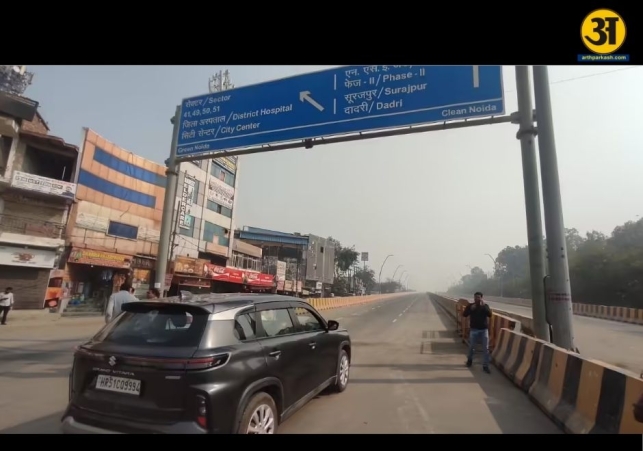
Bhangel elevated corridor opens on trial in Noida
Noida begins trial run of Bhangel elevated corridor to improve traffic on Agahpur–NSEZ route
Noida has started the trial run of a new six-lane elevated road built on the busy DSC Road. This stretch, which is around 4.5 kilometres long, connects the Agahpur petrol pump to the NSEZ area. The road was opened for commuters on Tuesday for testing and final adjustments. The Noida Authority hopes that this project will greatly reduce the heavy traffic that thousands of commuters face every day on this major route.
The new elevated road has been constructed to provide a smoother connection between Noida, Greater Noida, Dadri and Surajpur. DSC Road is known for long traffic jams, especially during rush hours, because it carries a huge number of vehicles throughout the day. Even short distances often take a long time to travel because of slow-moving traffic, crowded junctions and regular bottlenecks.
The construction of this project began in 2020 after repeated complaints from commuters and residents about the worsening congestion on the DSC stretch. Since then, the Noida Authority and its engineering teams have been working to complete the project as quickly as possible. Built at a cost of Rs 608.08 crore, the elevated corridor is considered one of the biggest recent infrastructure upgrades in the city. Officials believe that once it becomes fully operational, it will significantly improve travel conditions for thousands of people who use this route daily.
A major infrastructure upgrade
The Noida Authority has said that the elevated road will be completely opened to the public once all finishing work, safety inspections and structural checks are completed. Currently, minor tasks such as widening of culverts and final polishing of certain sections are in progress. The project has been developed by the Bridge Corporation, which has overseen the engineering and design work for the elevated structure.
Over the past few months, Authority CEO Lokesh M has regularly reviewed the construction progress. His inspections and continuous monitoring helped speed up the final stages of the project. Because of these efforts, the trial run could begin earlier than expected, giving commuters a chance to experience the benefits before the road is formally inaugurated.
The elevated corridor is expected to bring major relief to people living in villages and residential clusters along the route. The daily commute from areas such as Sadarpur, Chhalera, Agahpur, Baraula, Salarpur, Bhangel and NSEZ is known to be slow and unpredictable because of the congestion on the surface road. By shifting through-traffic to the elevated section, the Authority aims to reduce pressure on the ground-level road, making movement smoother for both local residents and long-distance travellers.
The project also benefits several residential and industrial sectors located close to DSC Road. These include Sectors 40, 41, 43, 47, 48, 49, 82, 88, 101, 106, 107 and 110. People from these sectors often rely on DSC Road to reach office areas, schools, markets or Greater Noida. With the new elevated road, their travel time is expected to reduce, and the overall traffic flow is likely to become more orderly.
ALSO READ: New strategies aim to reshape global tech growth and future manufacturing
ALSO READ: Kejriwal’s swift ascent contrasts with Kishor’s early setback in debut political battles
Relief for a congested stretch
Before the construction of the elevated road, the existing surface route frequently experienced severe jams. This was mainly because of the large number of shops, residential blocks and industrial units situated along the road. Vehicles stopping near markets, loading and unloading of goods, and pedestrians crossing the road added to the daily traffic chaos. Even with traffic police deployed at key points, the road was often heavily choked.
The elevated road aims to solve these problems by taking fast-moving through-traffic away from the busy local sections. Vehicles travelling towards Greater Noida, Dadri or Surajpur will no longer need to weave through the crowded ground-level lanes. This will help reduce delays and shorten travel time, especially during peak hours.
The Noida Authority believes that once the trial run is completed and the road is formally opened, overall traffic conditions in the region will improve significantly. The smoother flow of vehicles on the elevated structure will also reduce air pollution caused by idling cars stuck in traffic. In addition, it will enhance safety for pedestrians and cyclists who use the ground-level road.
Residents and office-goers who have started using the elevated stretch during the trial phase have already expressed relief. Many say that it has helped them avoid prolonged congestion, making their daily commute easier and less stressful. Shopkeepers along the surface road also hope that the reduced congestion will encourage more visitors, as people will not be discouraged by long traffic jams.
The elevated corridor is part of a larger effort by the Noida Authority to upgrade the city’s infrastructure and improve connectivity with neighbouring regions. Several other road, metro and drainage projects are also being planned or completed to meet the needs of the growing population.
As work on the finishing touches continues, officials say they will monitor traffic patterns closely during the trial run. Feedback from commuters will be considered when carrying out the final adjustments. Once all checks are completed, the elevated road will be officially opened for full public use.
Related News